Cosmic Geometry / Natalia Brandt, Jerzy Budziszewski, Jarosław Kozłowski, Józef Robakowski, Henryk Stażewski, Teresa Tyszkiewicz, Ryszard Waśko, Krzysztof Wodiczko
Fundacja Profile
to 14.11.2026-
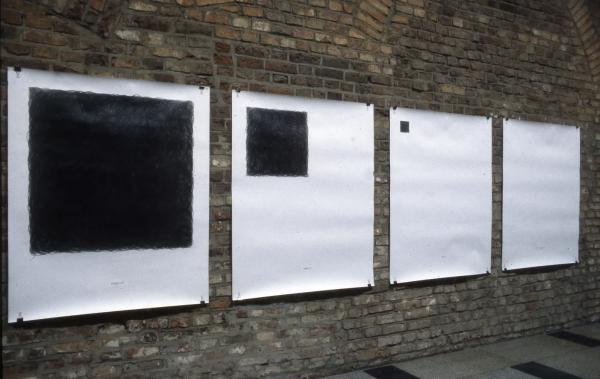
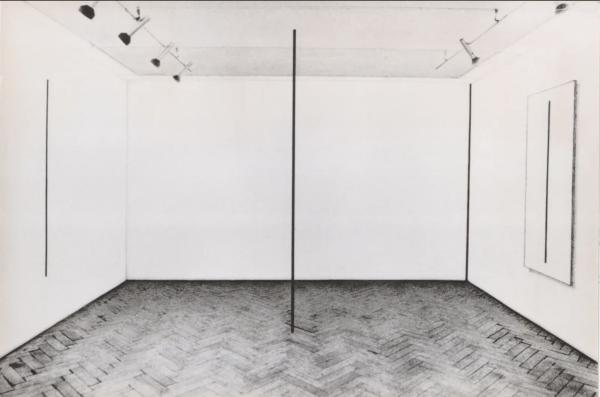
Jarosław Kozłowski, Surface Drawings, 1979, graphite on paper, 150 x 122 cm each, photo: J. Kozłowski -
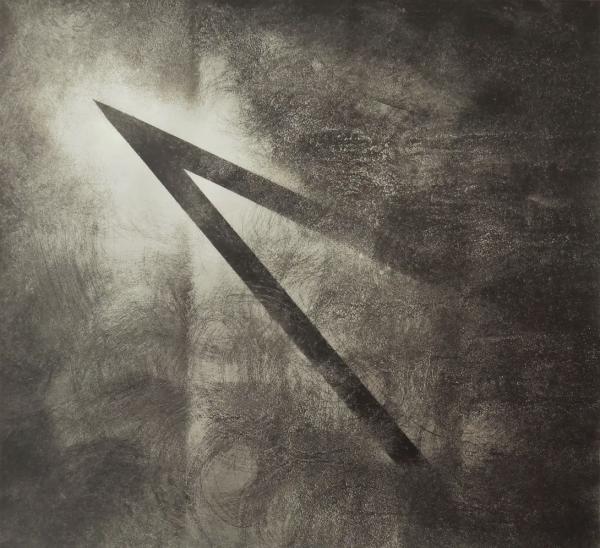
Józef Robakowski, from the "Energy Angles" series, 1975-1982, pencil, abraded and mechanically sprayed metal on photografic paper, 42,3 x 46,2 cm, photo: Profile Foundation archive -
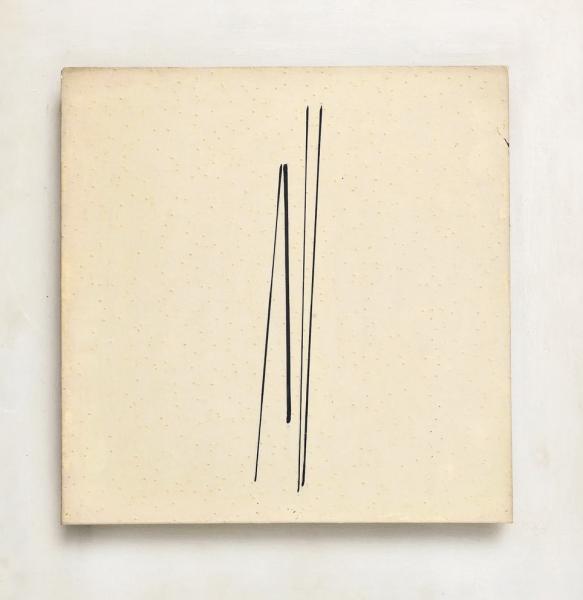
Henryk Stażewski, No. 57, 1975, acrylic on aluminum, 29,7 x 29,7 cm, photo: Profile Foundation archive -
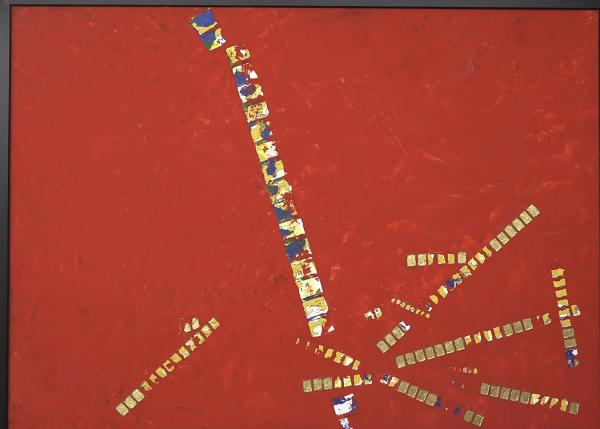
Ryszard Waśko, Motionless Picture: White, Blue, Yellow and Red, 1983, acrylic on fiberbroad, 80 x 110 cm, photo: Profile Foundation archive -
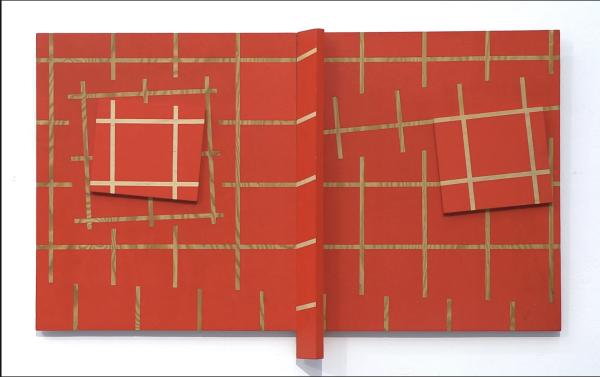
Jerzy Budziszewski, Untitled, 2000, acrylic on wood, 67 x 106,5 x 7 cm, photo: Profile Foundation archive -
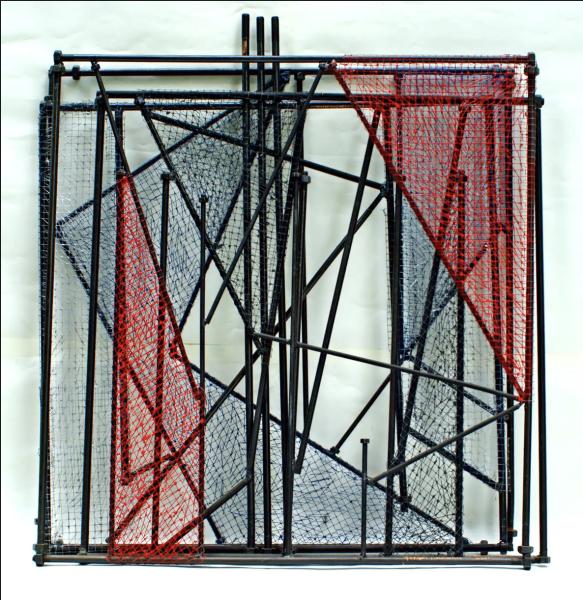
Teresa Tyszkiewicz, Frames, 2000, pins, iron, metal, acrylic, 4 parts: 103 x 96 x 10 cm, photo: Zdzisław Sosnowski -
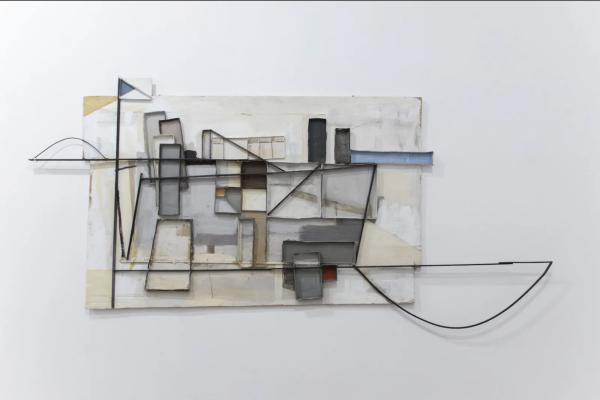
Natalia Brandt, Grammatical Shapes II" 2006, 97 x 223 x 8 cm, paper, cartboard, wood, emulsion, acrylic on HDF board, photo: Natalia Brandt -
Krzysztof Wodiczko, Line as Theory, Object, Reality and IMage, 1976, ink on photography, 8 x 20 cm, photo: Profile Foundation archive
For the pre-war Henryk Stażewski geometry was the subject of art, and mathematics -its method. In the decades that followed, the leading figure of the Polish avant-garde sustained a discourse on geometry that extended far beyond its formal definition.
However, the avant-garde traditions of geometric art underwent profound reformulations; within the rationalist framework of neo-constructivism, increasing formalization provoked criticism for reducing art to a fetishized language of form. Detached from its metaphysical justification, ubiquitous geometry—now functioning as a form of seductive art—came to dominate popular culture and lead the excesses of design. Not to mention the modernist utopia of geometry, embodied in the geometric grid, which ultimately proved to be a prison for the free artist.
The persistence of geometric forms in contemporary artistic practices invites reconsideration. To what extent can geometry still reaches a “cosmic” dimension? Especially since the artists gathered here resist the notion of formal autonomy on the contrary, they often strive to activate its critical functions, while geometry accompanies a clear radicalization of their artistic practices.
In the work of Krzysztof Wodiczko, the constructive force of the line—recalling the legacy of Alexander Rodchenko—becomes an instrument for interrogating visual ideology and engaging with political space. For Jarosław Kozłowski, the square—at once monumental and later almost vanishing—operates as a site of negotiation, the status of the image and the conditions of art itself. The abstract structures of Energetic Angles by Józef Robakowski, referred by the pan-energetic vision of Kazimierz Malevich, materialize the dynamic and communicative potential of artistic energy. In the works of Ryszard Waśko, the use of mathematical calculation and progressive geometric reduction transcend into a hypothetical space-time continuum. In Jerzy Budziszewski's multidimensional constructions, we encounter a disturbed geometry, beyond rationalization in the harmony of complementary verticals and horizontals. In Teresa Tyszkiewicz's “Frames”, geometry unexpectedly introduces discipline into the artist's emotionally charged art. Natalia Brandt, in her series “Grammatical Shapes”, allows the chaos inherent in the contemporary experience of the world to creep into the construction of her works.
Reversing a well-known phrase by one of the founders of minimalism, one might say that what we see is not merely what we see. As in Stażewski’s white paintings, where the restrained articulation of black lines—defined by direction, rhythm, and movement—functions as a kind of geometric antidote to a “world turned upside down.”
Fundacja Profile
Franciszkańska 6
Warszawa
00-214
- monday
- Closed
- tuesday
- 12:00 pm - 7:00 pm
- wednesday
- 12:00 pm - 7:00 pm
- thursday
- 12:00 pm - 7:00 pm
- friday
- 12:00 pm - 7:00 pm
- saturday
- 12:00 pm - 7:00 pm
- sunday
- Closed