Full Service / Ola Mokrzycka
BWA Warszawa
-
Olga Mokrzycka -
Olga Mokrzycka -
Olga Mokrzycka
Natalia Fiedorczuk on Olga Mokrzycka
Low expectations won’t make you a better person. You won’t automatically become good when you stop wanting in general. That is what TikTok feminists say. This is how I experience Olga Mokrzycka's painting – in a direct and uncompromising way.
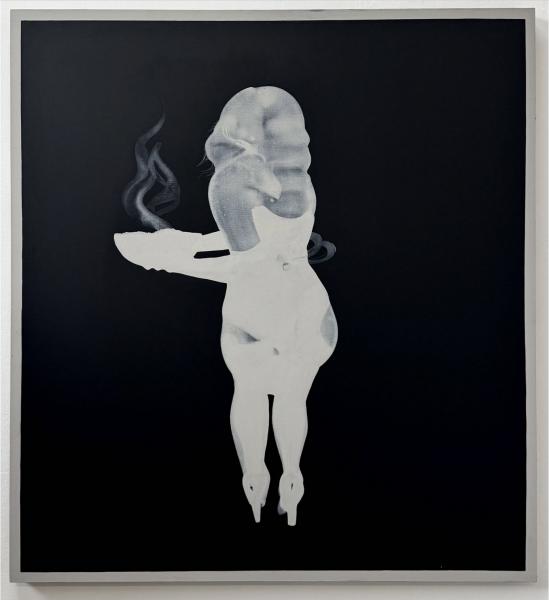
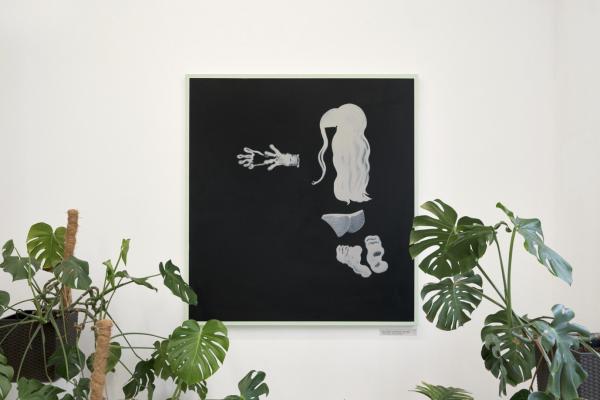
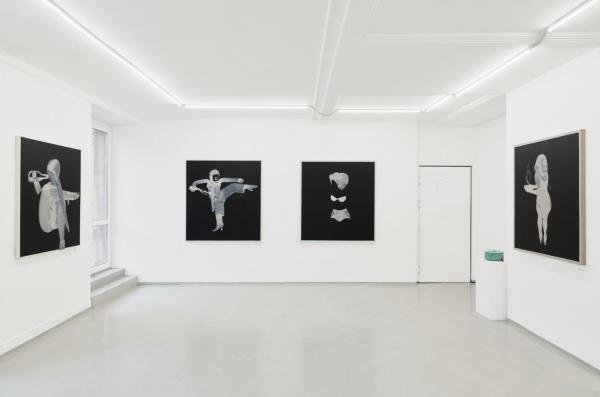
Mokrzycka spins the tale of a woman on the edge: prancing across across the grid of servility, sexual attractiveness, self-improvement, and emotional labor. The heroines of her paintings have soft, malleable limbs that may imply hindered movement but really manifest as constant tests of the endurance of their own bodies. The women portrayed are not symbols that can easily be drawn into feminist banners; they deceive and seduce. They resemble an illustration of a popular rhyming meme – “just an ordinary girl, it seems, but inside she's bursting at the seams.” Just when you think a woman is about to fall apart, she gets up, dusts off her skirt, and fires a self-deprecating joke at her opponent. Bang, the threat of decompensation averted, an indulgent smile pasted on her face, but a trace of anxiety and discomfort that the joke was a little too close for comfort remains.
Cultural researchers point out that the Covid-19 pandemic has fueled a phenomenon tentatively called the fifth wave of feminism or digital feminism, although its origins can be traced back to the turbulent 2010s, for example, in the powerful wave of the #MeToo movement. The hashtag campaign, known to most women in the globalized world, launched what our feminist mothers and grandmothers fought for – the sharing of experiences, especially experiences of emotional oppression. After what happened in 2017, the digital landscape began to fill with other, shared, female hashtags, not only related to direct experiences of sexual abuse, but also sharply and mercilessly exposing the systems of inequality of which women become unwitting, overburdened hostages. And while the artist’s images leave viewers with a potential streak of anxiety, the textual framework of the exhibition, which I have the great honor of opening with my text, can draw on stories that are much more unruly and direct. In my view, this narrative tone fits perfectly with the transformations of language, of which modern social media are both a tool and a field –
places where ideological tit-for-tat coexists with areas of unprecedented empowerment and community.
Mokrzycka's painting is not socially engaged art in the direct sense, but it speaks directly to the urgent need for such engagement. Mokrzycka's painting has also found its audience not through classic gate-opening practices (the system of exhibitions, competitions, residencies, curatorial recommendations), but through Instagram. Thus, I respond with genuine pleasure to this unspoken request for the validation of “women from the internet.”
BWA Warszawa
Marszałkowska 34/50
Warszawa
00-554
- monday
- Closed
- tuesday
- 12:00 pm - 7:00 pm
- wednesday
- 12:00 pm - 7:00 pm
- thursday
- 12:00 pm - 7:00 pm
- friday
- 12:00 pm - 7:00 pm
- saturday
- 12:00 pm - 4:00 pm
- sunday
- Closed