Modern Life for Home and Farm / Małgorzata Mycek and Jaanus Samma
BWA Warszawa
to 06.06.2026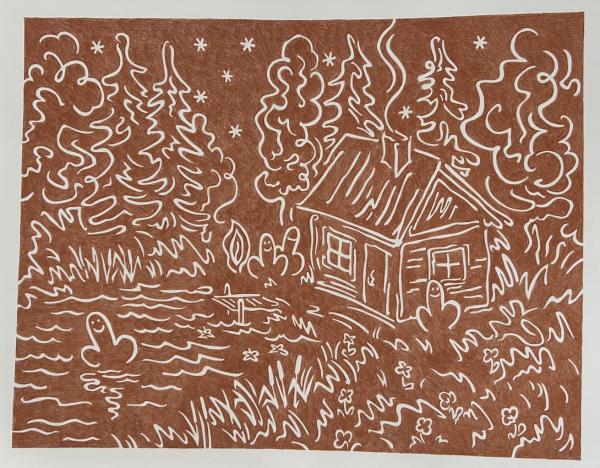
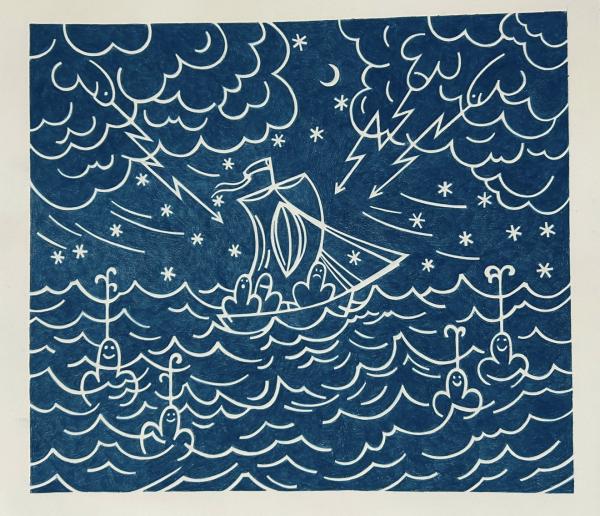
The “Mińsk” refrigerator, the “Frania” washing machine, and the small Fiat were symbols of modernity in the Polish People’s Republic. The rapid modernization of postwar socialist Poland bore the face of Comrade Gierek shouting to the working people of cities and countryside his famous “Will you help?!” In cities, the wave of modernization meant the construction of large-panel housing estates, flyovers, and factories; in the countryside, it meant the development of State Agricultural Farms (PGRs), centrally managed collective farms. Technological innovations—such as electric milk pasteurizers, egg incubators, or sisal twine for reapers (which was perpetually in short supply) - were presented in the Sunday morning TV program "Modernity at Home and on the Farm".
The process of modernizing society, based on material goods, was closely supervised by the state. Citizens of the Polish People’s Republic were to have access to washing machines and irons, but not to behavioral models and value systems coming from the West. How permeable this informational Iron Curtain really was is demonstrated, for instance, by the Queer Archive Institute created by Karol Radziszewski, in which the artist collects materials related to queer life before 1989 in Poland and across the Eastern Bloc. Zines from Zagreb and Budapest, as well as the magazine Filo published in Gdańsk, reveal how unofficial channels of knowledge distribution functioned in countries where homosexuality officially did not exist.
But did the social changes that accelerated significantly after the fall of the Soviet Union affect cities and rural areas to the same extent? Was the emancipation of non-heteronormative individuals as rapid in Warsaw as in Radoszyce village in the Bieszczady Mountains? All available data suggest that large cities have long provided safer spaces for people coming from more traditional, conservative rural environments. Moving to a dormitory while attending a technical school or high school, or leaving for university, has been a crucial moment for many on the path toward living beyond inherited social norms. The “modernity” in the title thus refers not to technological progress, but to an attitude toward contemporary philosophical currents, social positions, and openness to change.
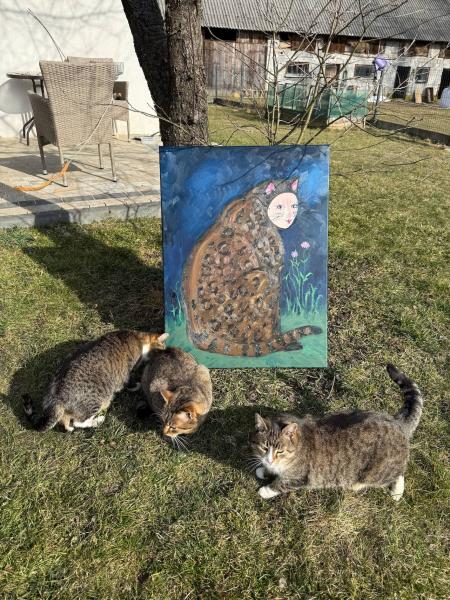
Małgorzata Mycek and Jaanus Samma are two artists who, in their work, address the lives of queer people in provincial settings and non-heteronormative motifs in folk art. In doing so, their practice disrupts the binary division between progressive urban culture and conservative rural culture. The jury of the Bielska Jesień Competition in 2025 awarded Małgorzata Mycek the Grand Prix for “a bold rewriting of the visual geography of the countryside - at once sensitive, ironic, and political - which redefines it as a space of resistance, community, and queer imagination.” Some time ago, after ten years spent in a large academic city, Mycek resettled in his home village. As an openly queer person, he fully participates in community life, helps run the family farm and apiary, and studies at the Folk University of Artistic Crafts. In one interview, Mycek stated: “In researching folk history, I want to focus on the female perspective or on moments when queer individuals appear. In the past, the concept of queerness was not defined - anyone who deviated from the norm was suspected of contact with diabolical forces, hence all the witches and specters. I’m interested in this history of oppression.”
For years, Jaanus Samma has explored Estonian museums and ethnographic archives in search of queer threads within folk art. His practice combines archival research with oral history and fieldwork, focusing on the intersection of national and gender identity, and using techniques like embroidery and weaving to reinterpret contemporary themes. A key source for his work is a collection of Estonian obscene folk songs from the late 19th century, preserved alongside more conventional texts as a rare glimpse into everyday life. Many of these rhymes are witty and inventive, yet they also carry deeper meanings - functioning as warnings or reflecting fears and concerns. Today, they can seem cryptic, as their original context has often been lost. A striking motif is the personification of genitalia - depicted as traveling and acting like human figures - sometimes blurring distinctions between male and female bodies. Samma’s recent works engage with this overlooked material, revealing insights into the intimate lives of past generations.
BWA Warszawa
Marszałkowska 34/50
Warszawa
00-554
- monday
- Closed
- tuesday
- 12:00 pm - 7:00 pm
- wednesday
- 12:00 pm - 7:00 pm
- thursday
- 12:00 pm - 7:00 pm
- friday
- 12:00 pm - 7:00 pm
- saturday
- 12:00 pm - 4:00 pm
- sunday
- Closed